

The Arts
At Heron Academy, The Arts are at the core of our Equals Semi-Formal Curriculum, forming the foundation of the My Creativity and My Communication strands. We believe that creativity is a fundamental human right — every learner, regardless of complexity of need, should have daily access to meaningful artistic, musical, dramatic, and movement-based experiences.
Our Arts curriculum recognises that for learners with Severe or Profound and Multiple Learning Difficulties (SLD/PMLD) and Autism, creativity is not about performance or product, but about process, expression, connection and regulation. Through The Arts, pupils learn how to communicate, belong and participate — building the emotional, social and physical competencies that underpin lifelong learning and preparing for adulthood outcomes.
Heron Academy receives prestigious Artsmark Award
Pupils and staff at Heron Academy are celebrating after receiving a prestigious Gold Artsmark Award.
Artsmark is the only creative quality standard for schools, accredited by Arts Council England. It transforms teaching through creativity, empowering teachers with the skills they need to embed arts, culture and creativity across the whole curriculum, and is proven to support pupil outcomes and wellbeing.
To achieve their Artsmark Award, Heron Academy had to develop their arts and cultural provision to embed a broad and ambitious curriculum. This was achieved by creating an overall plan that was committed to and delivered across the whole school.
Heron Academy received professional support through an immersive learning programme from Artsmark’s delivery partner, Goldsmiths, University of London, who are world-renowned leaders in creative pedagogy and cultural placemaking.
The Artsmark Assessor commended “Heron Academy’s first Artsmark journey has been impressive and significant. You set out to address uneven levels of skill and confidence in your staff and inconsistency in provision. You have revised schemes of work, establishing secure frameworks for teachers and clear skills progression which senior leaders have monitored for impact. Through strategically directed CPD, including observing and engaging with arts practitioners , staff have felt supported and have grown greatly in confidence. Furthermore, and importantly, there is now a much stronger shared understanding of the value of the arts to your pupils’ overall learning, wellbeing and personal development, and this has led to the arts being valued highly. The arts have been given a stronger presence in the timetabled week, including Dance and Drama, and this has helped to embed your collaborations with Step into Dance and, BLINK Urban Drama Company in your curriculum. This has also led to an increase in pupils’ engagement with events beyond the school. Aligning your curriculum with the offer from arts organisations such as Tate Schools and Teachers and the I Am Festival for SEND schools at Tate Modern has been beneficial and it is great to hear about your work with the Southbank Centre’s Imagine the Future poetry project where sustained co-planning and collaboration with practitioners and visiting poets led to developments in inclusive practice and adaptations that have since benefited other SEND settings. This is a wonderful model for your future plans to contribute to wider professional dialogue around inclusive arts practice in SEND settings. Your pupils clearly loved and valued your Arts Week 2026 and your extension of your Arts Award offer will have given pupils greater ownership of their learning. It would be good to consider other ways in which you can engage pupils in the planning and delivery of authentic arts experiences. Arts practitioners are often adept at co-creation with pupils and this might be an area to explore in your planning of future collaborations. Similarly, while your commitment to inclusion is deep, you can perhaps build further on how your curriculum and your wider offer reflects and celebrates cultural diversity. Your strengths in your first journey stem from strong strategic Leadership that has built developments through coherent Curriculum Design and supportive CPD. As you continue to embed the use of the arts across teaching it will be good to capture the impact and measurable effects on your pupils’ learning and lives. This will be particularly valuable as you look to share your learning beyond Heron Academy. Engaging with other settings and with arts educational networks will support this. The growth of collaborations with arts practitioners and organisations can contribute to CPD and the further development of your Range of Offer, including enhancing the celebration of cultural diversity. It can also help you to harness and develop your pupils’ energy and confidence. With a strong and shared understanding of the value of the arts now in place, there will be many excitements ahead on your next journey. We look forward greatly to hearing all about it!”
Dr Darren Henley OBE, Chief Executive of Arts Council England, said:
“I would like to congratulate Heron Academy on their Artsmark Award. Creative activities and cultural experiences enrich our lives, open our minds to new possibilities and help us make sense of the world around us. As an awarded Artsmark school, you’re demonstrating that by offering a broad, ambitious and creative curriculum, your young people will develop character and resilience, increasing their knowledge, curiosity and skills that will remain with them through to adult life.”
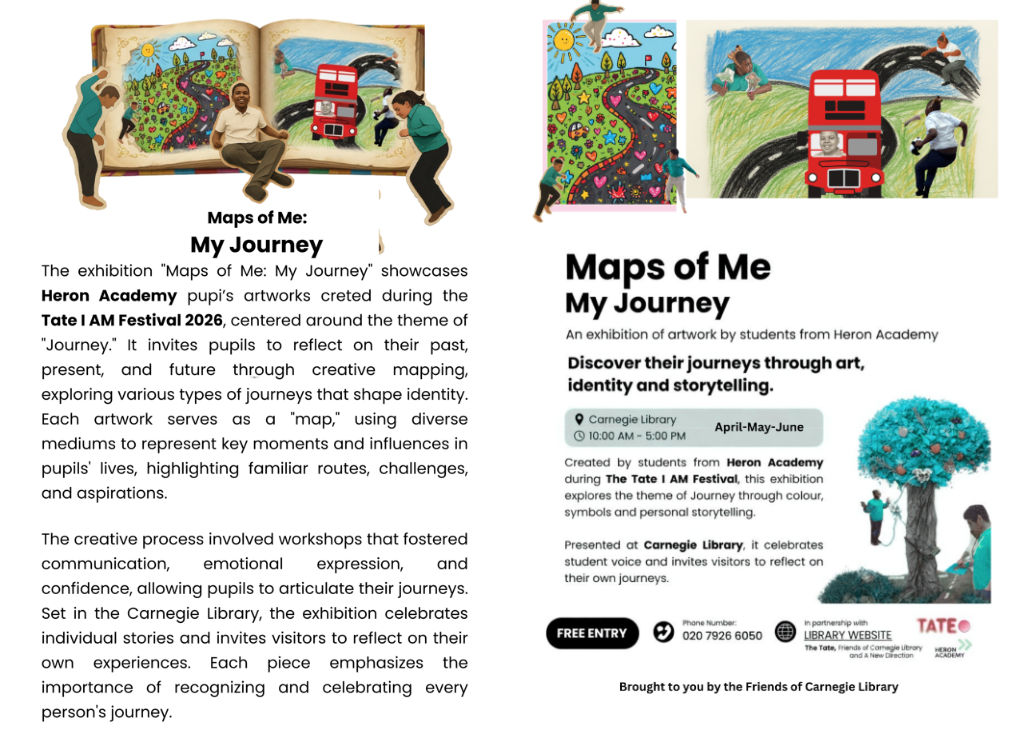
Exhibition at Carnegie Library
Our pupils’ artwork created during Art Week, inspired by the theme “Maps of Me: My Journey.” is up at the Carnegie Library. Each piece represents a unique story — mapping experiences, places, emotions, and dreams that shape who they are. Together, the exhibition celebrates creativity, individuality, and the many paths that connect us all.
/i/video/IMG_8256.mov
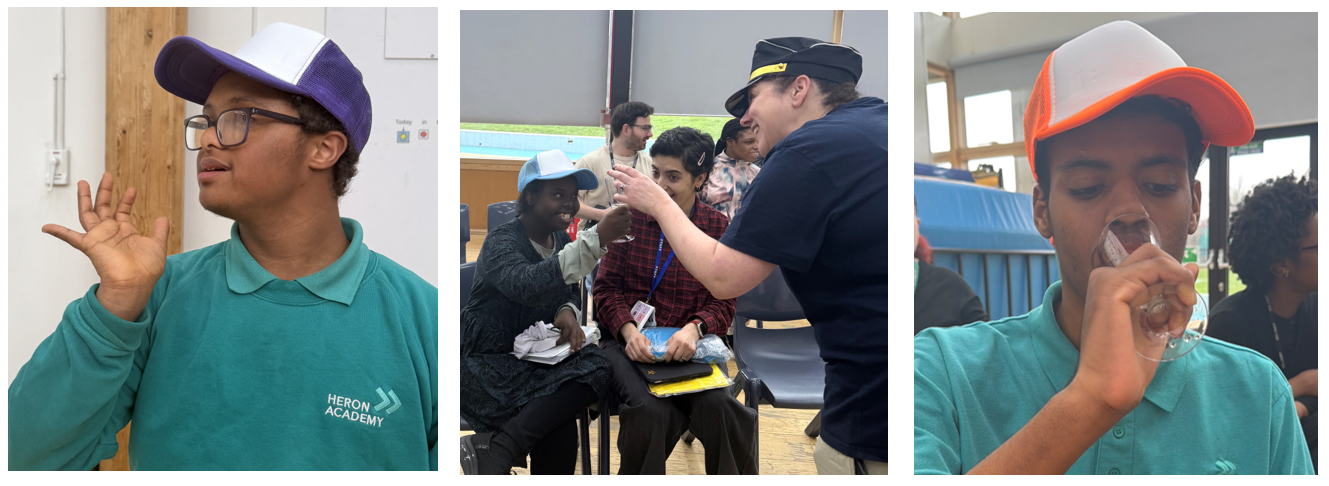
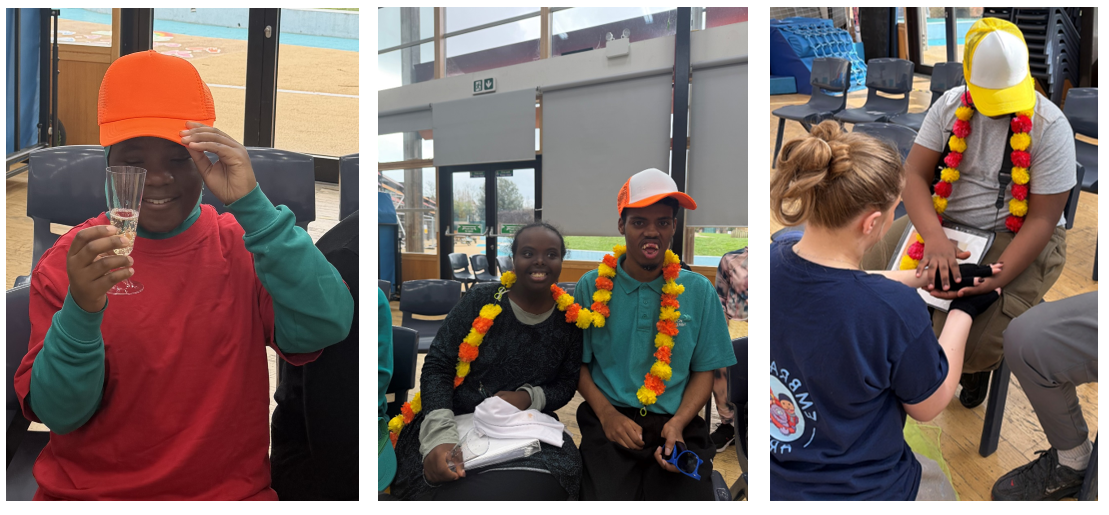
Arts Week 2026
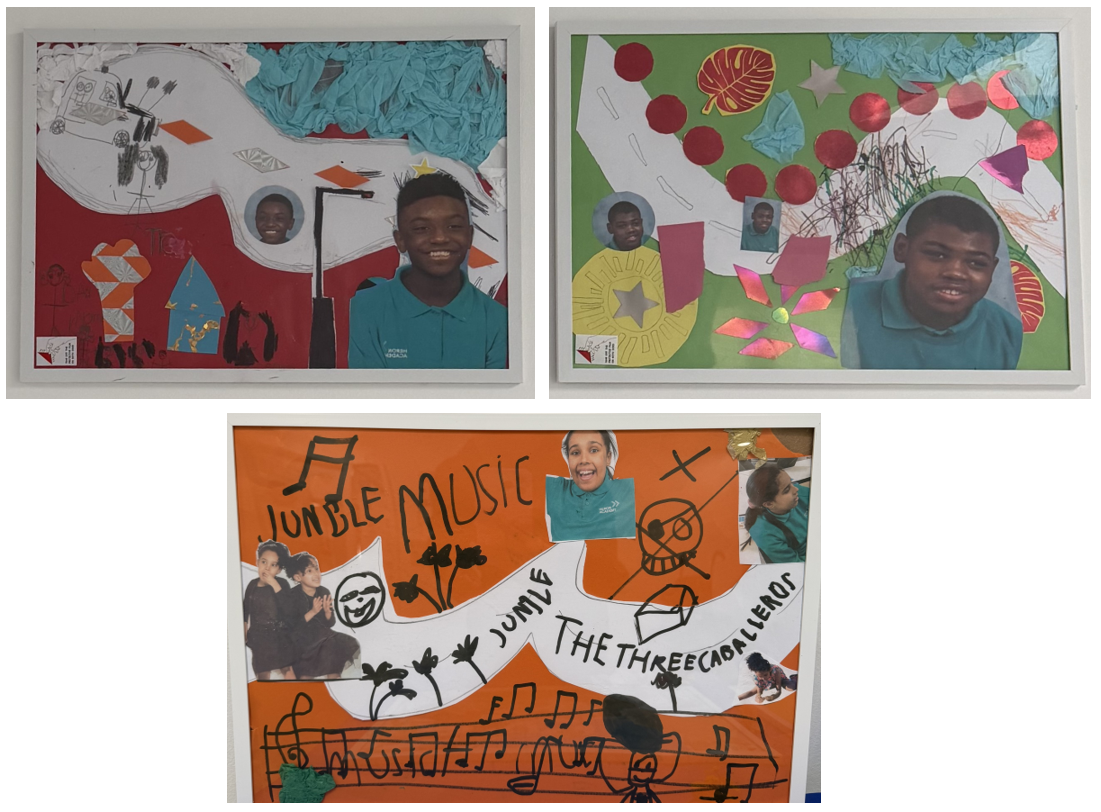
Decorative Wheels
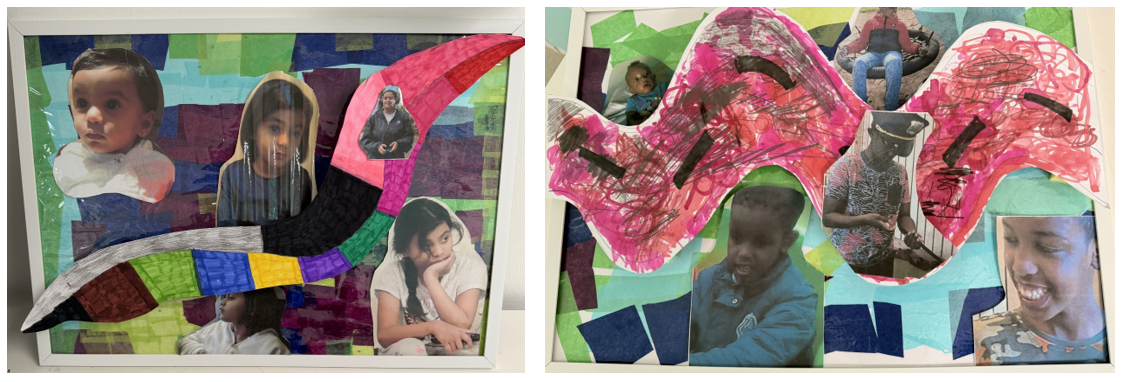
Every half term, the pupils are given a theme where they create art work to decorate the wheels in our atrium.
Spring 2026
Brixton Orchastra
We were thrilled to welcome the Brixton Ensemble for a fantastic live performance featuring trumpets, saxophones and trombones. The musicians demonstrated the unique sounds and qualities of each instrument, creating a rich multisensory experience. Pupils were highly engaged, asking questions, interacting with the performers and showing real curiosity about how the instruments worked. The session sparked excitement and encouraged many students to explore music in new ways.
/i/video/IMG_2319__2_.mov
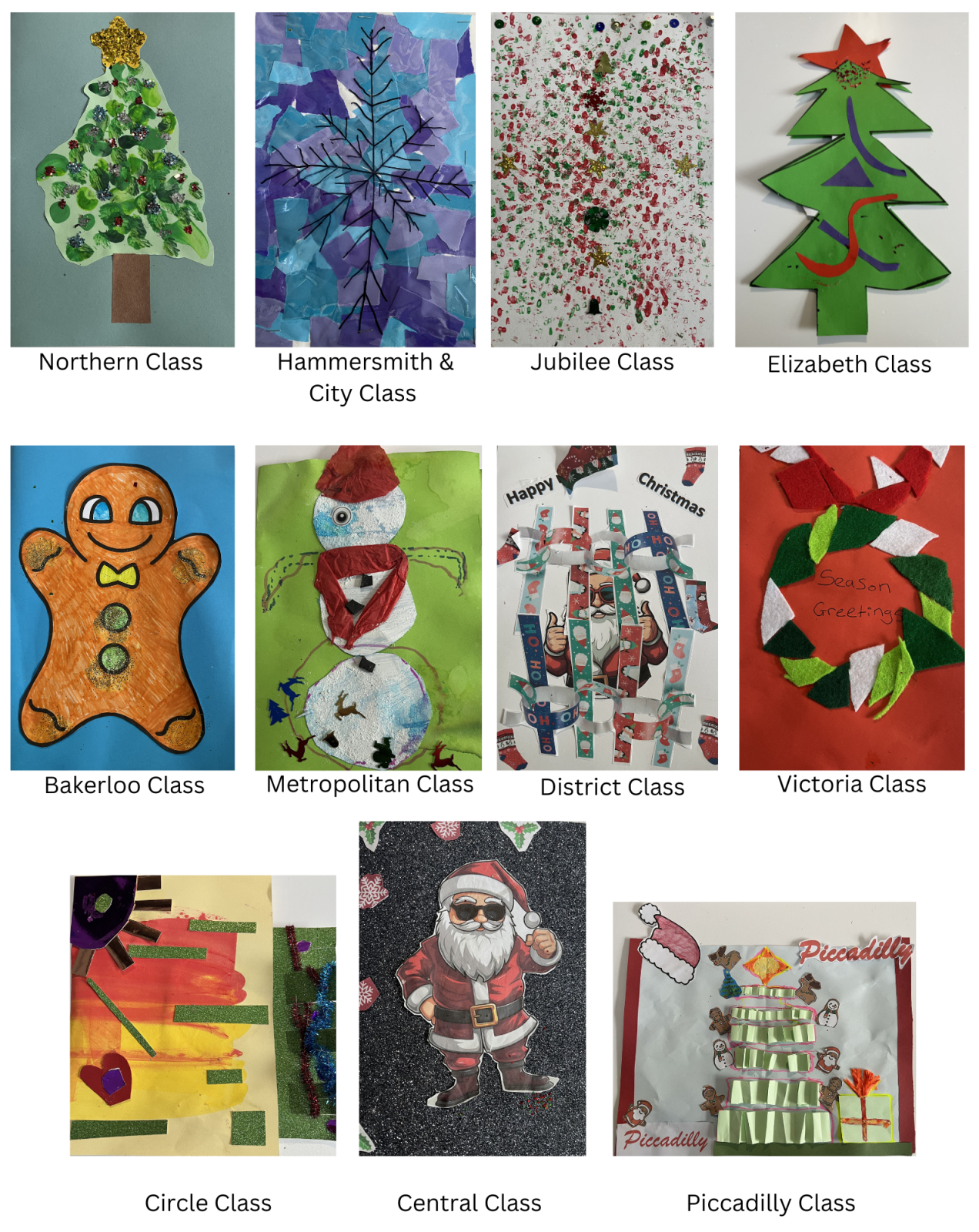
Christmas card competition
2025

2024
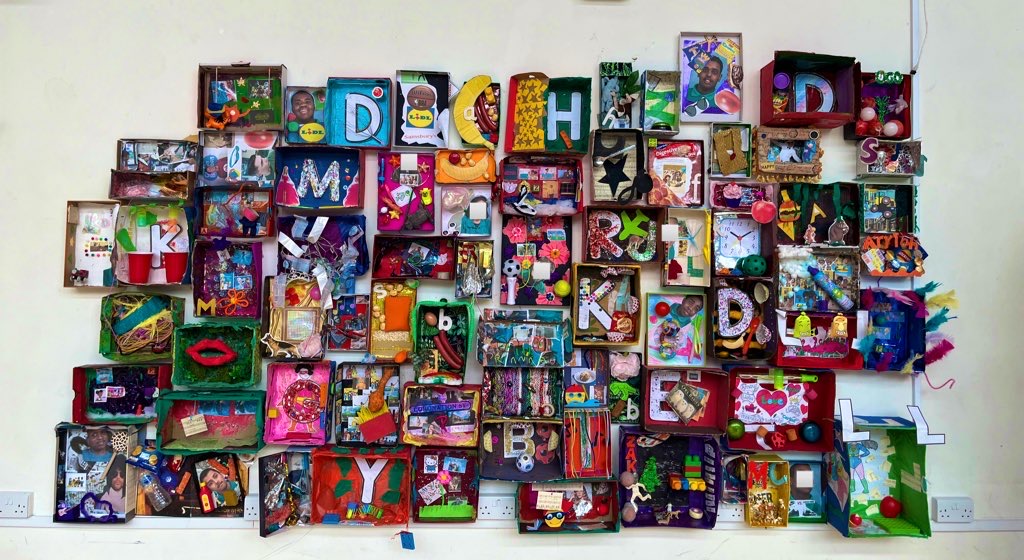
Personalised shoe boxes
For Arts Week 2024, our pupils decorated a shoe box. Everyone worked so hard on the boxes, and they turned out amazing. They were all so personal to each pupil and allowed their likes to be expressed through art.
Cloud Work
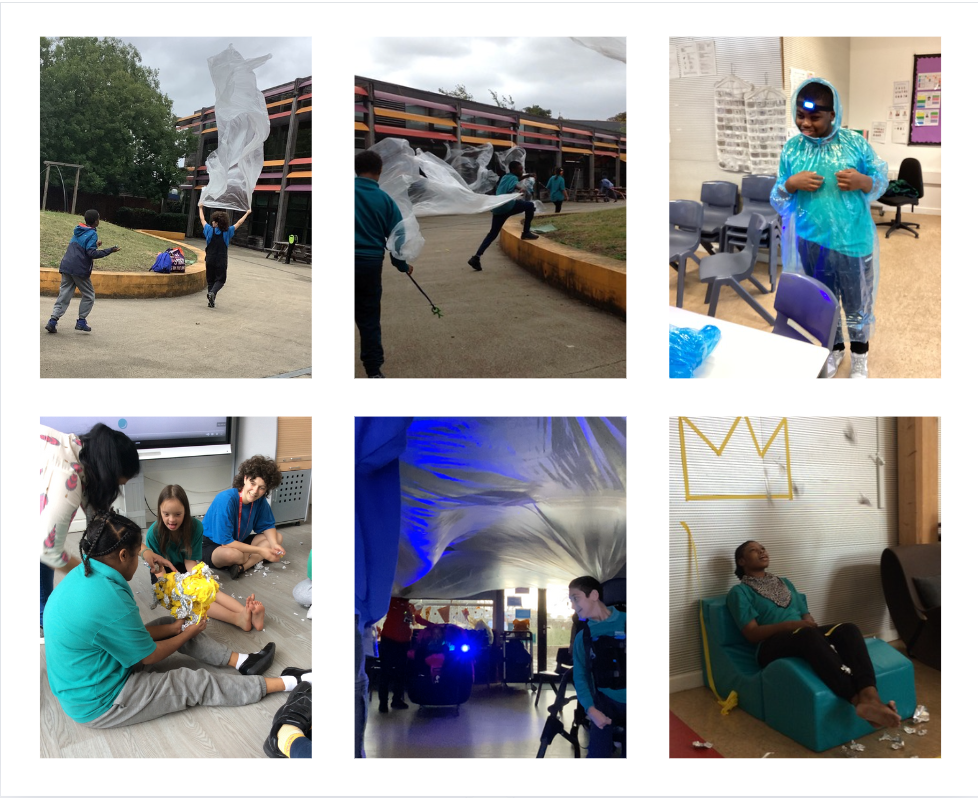
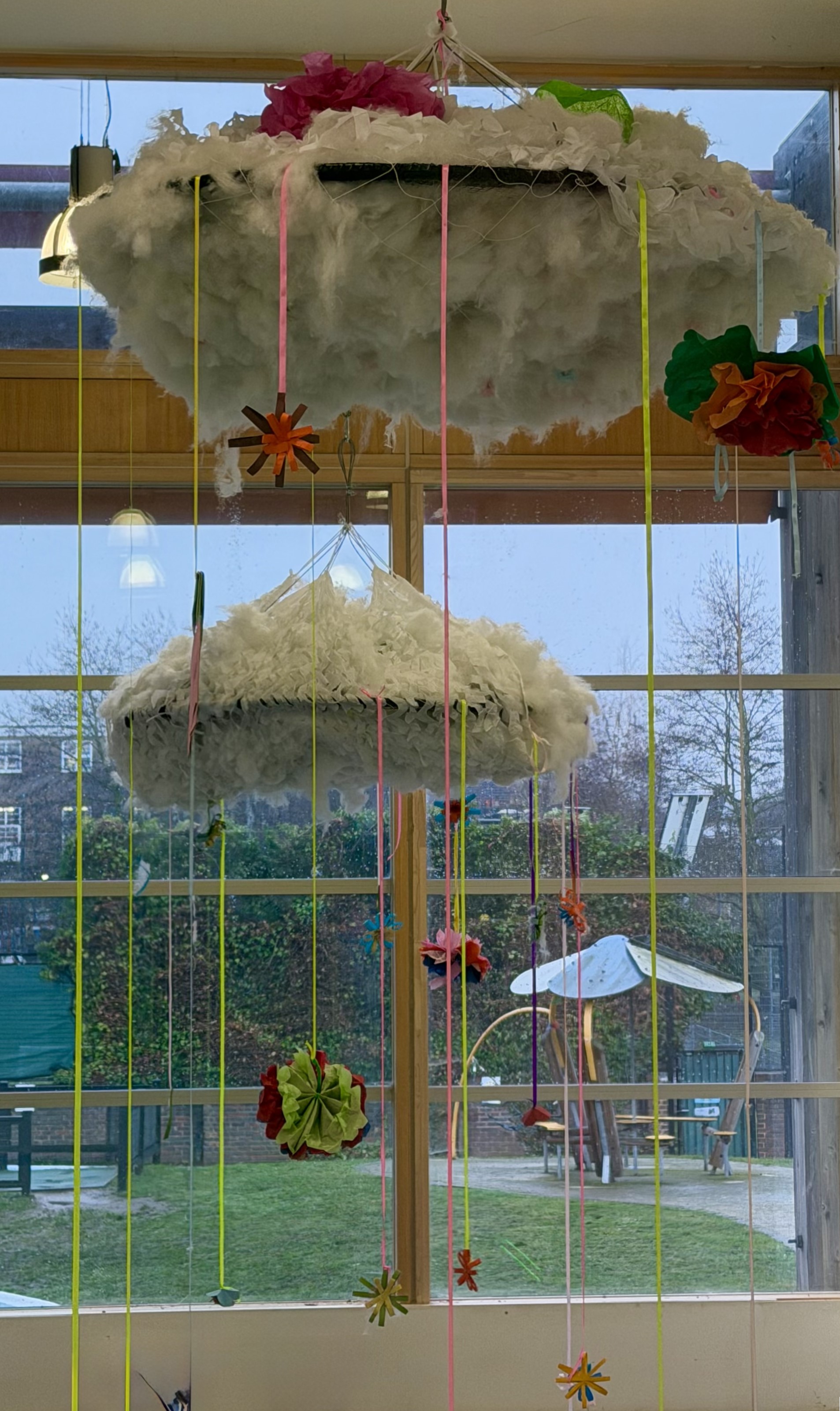
Cloud Work is a film and performance exploration into collective connection within the everyday spaces of Heron Academy, using different everyday materials as tools: dust sheets, tarpaulins, elastic bands.
We used the story of the cloud as a frame that could hold together our different explorations. Each session was structured around different movements with materials. The proposal for the sessions focused on both the adults working in the school and the young people.
The ideas in the story were created by all the people in the space of the sessions, as well as from input from people in the school outside of the direct space of each session. For example, the idea of the cloud came from the strong focus in the morning daily routine on weather, and that’s when the project started, in September, there were many clouds in the sky. And that the students strongly responded to the idea of a cloud when they were working with the dust sheet, following the morning weather routine. The story then grew following the engagement of students and adults in the movement of the dust sheet cloud: up and down, around and around, blowing through the school as it did. People in the school who witnessed the sessions from afar also contributed to the story by talking about them afterwards, by noticing different things that the cloud had done or not done, things to change, things they had thought of.
Each week, we built on things that we had discovered in the previous week. For example, that if, when you have lifted the dust sheet cloud up, you let it go at the top, it floats up and up, and then comes down in a different point each time. Or, that if you are in the middle of this cloud and put your hand up, it might go through it! Or, that if you are under this cloud blowing down the corridor, it might shred itself into fragments! We explored through experiencing the material, our own bodies with the material, the interaction between our bodies, the material, other people’s bodies and in our everyday spaces of the school: classrooms, playground, corridors, hall, lift, stairs, dining room, space in front of the coffee shop, the space of the buses in the morning. Did the everyday spaces change to fit the cloud? Did the cloud change to fit the spaces? Did we change to fit the cloud? Did the cloud change to fit us?
Once we had explored the dust sheet cloud quite a bit, it became clear that for us to feel together and inside the cloud more easily, and in order for the cloud to travel, for those classes that wanted this, a more secure cloud was needed (one that didn’t shred quite so easily when journeying/getting caught on things): the blue tarpaulin took this role. There was also input from people in the school community regarding sustainability and the dust sheets, which was important. So there were different blue tarpaulin clouds to suit different cloud needs: some with holes in, some lined with shiny, reflective materials, some plain. Some big, some small, some on the ends of umbrellas that could travel down corridors held over wheelchairs quite easily. We explored the blue interior space of the tarpaulins together, using different types of light, sound, movement tasks. What is it like creating this internal bodily space together?
The blue elastic bands became a third cloud work material for some classes that responded to this material. How could we move together, connected by blue elastic, through the different spaces of the school? How could we explore an inside feeling of the cloud without physically being inside something?
Part of the sessions was an offer of challenge or a level of collective risk-taking (with the understanding that this is so different for each person, depending on their own life experiences) in order to know more about our interconnected edges. What we like, dislike, find hard, find easy, need from others, can give others. What can we learn from each other in our differences? And what commonalities do we have? The metaphor of the cloud, in conversations with some adults, was also about dealing with difficulty together, being together in that challenge or struggle. What do we do when the cloud gets stuck in the door? Stuck in the tree? Stuck in the lift? What do we do when we all get overwhelmed in the cloud? Or feel tired or uninspired or dizzy or unwell or unsupported? How do we support each other to move through this together? To move, for example, connected with elastic bands, down the stairs, when we are scared of heights? There were many moments of difficulty and challenge in the work that we explored collectively. And then how, alongside these, do we find moments of joy in togetherness? There was also so much joy in the cloud. The story ended with a joyful celebration of the cloud, that the cloud will stay, that we will stay in the cloud, together.
The last step of the film was recording the words of the story by young people as narrators. These had come from ideas created week on week, through gestures made in the sessions; through things that the adults said in the sessions; through things that the young people said; through conversations outside of the sessions with people in the school. And then, in this last step, having written the cloud story down, the story was moulded and changed through the narrators who spoke it, who added their own ideas, emphases, thoughts, into the words. The word ‘transform’ came entirely from a young person on the very last day of recording the words, and fitted well with my experience of the project. Being in the school for this project, and working with adults and young people in each class regularly, and with the school staff as a whole, taught me a huge amount about interconnection, community, care, and the transformation that can take place through collectivity.
The ideas for the proposal came from my own previous practice explorations, from film work with John Chilton School in 2023, Lost in the Maze, as well as taking inspiration from artists and theorists such as Mia Mingus on disability justice and access intimacy, Paolo Freire and bell hooks on liberatory pedagogies, Lygia Pape on collective performance, Lama Rod Owens on interconnectedness and on being with difficulty alongside joy, Joanna Grace and her book on PMLD ‘Sensory-Being for Sensory Beings’.
Below are behind-the-scenes photos - click here for the final film!
By Katherine Smith